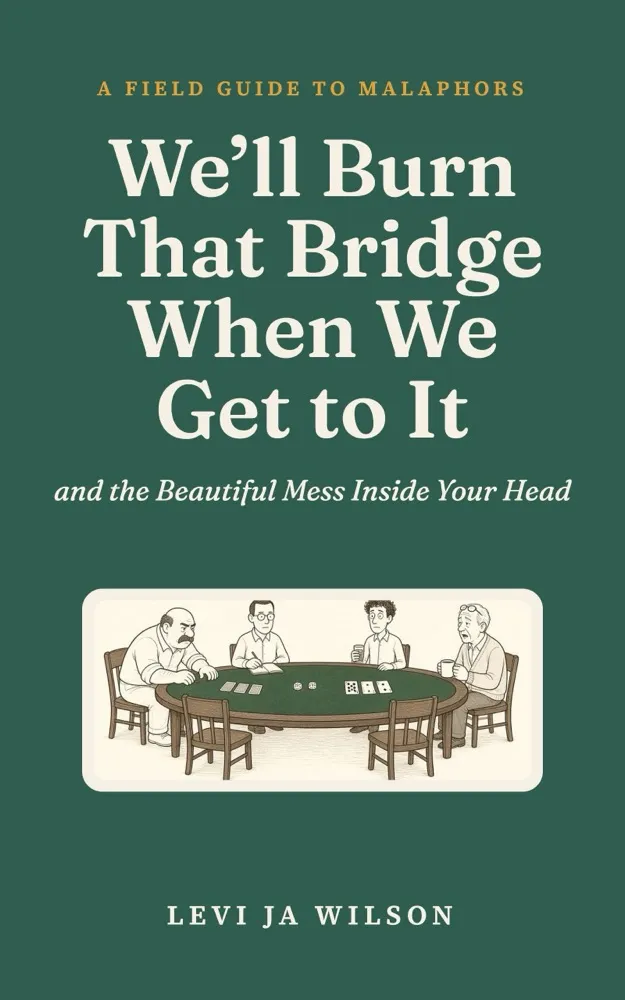
A field guide to malaphors
We'll Burn That Bridge When We Get to It
A Field Guide to Malaphors, and the Beautiful Mess Inside Your Head
by Levi JA Wilson
"It's not rocket surgery." Somebody says it in a meeting. Nobody blinks. The point lands, and one person at the table starts grinning and cannot stop. That is a malaphor: two idioms that collide in one sentence and somehow still make sense. This book collects 148 of them.
Every entry is a specimen.
Each malaphor gets the full treatment, in five parts.
- The Parents. The two idioms that collided.
- Where They Came From. The real origin of each, with the popular myths called out by name.
- How They Collided. Why these two, out of every idiom in your head, ended up in one sentence.
- The Scorecard. Sense-o-Meter, Mental Image and Seamlessness, totaled into a tier: Bronze Bear, Silver Lining, or the rare Golden Pope.
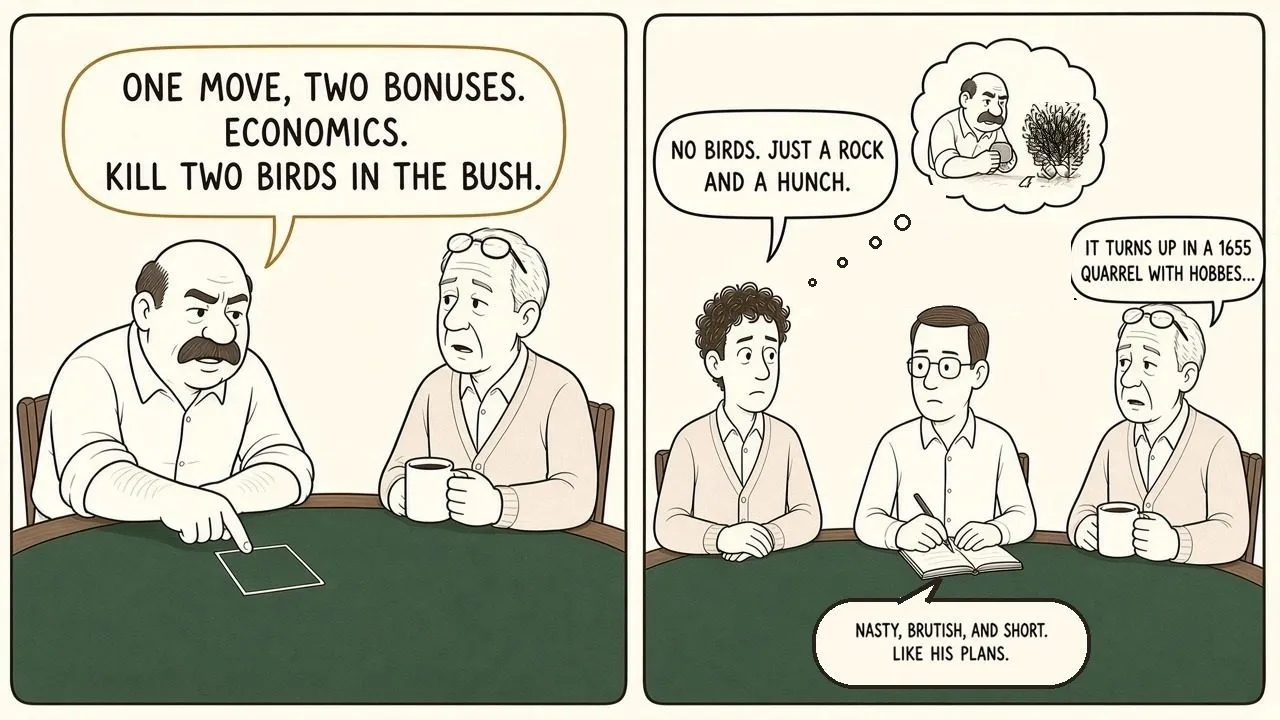
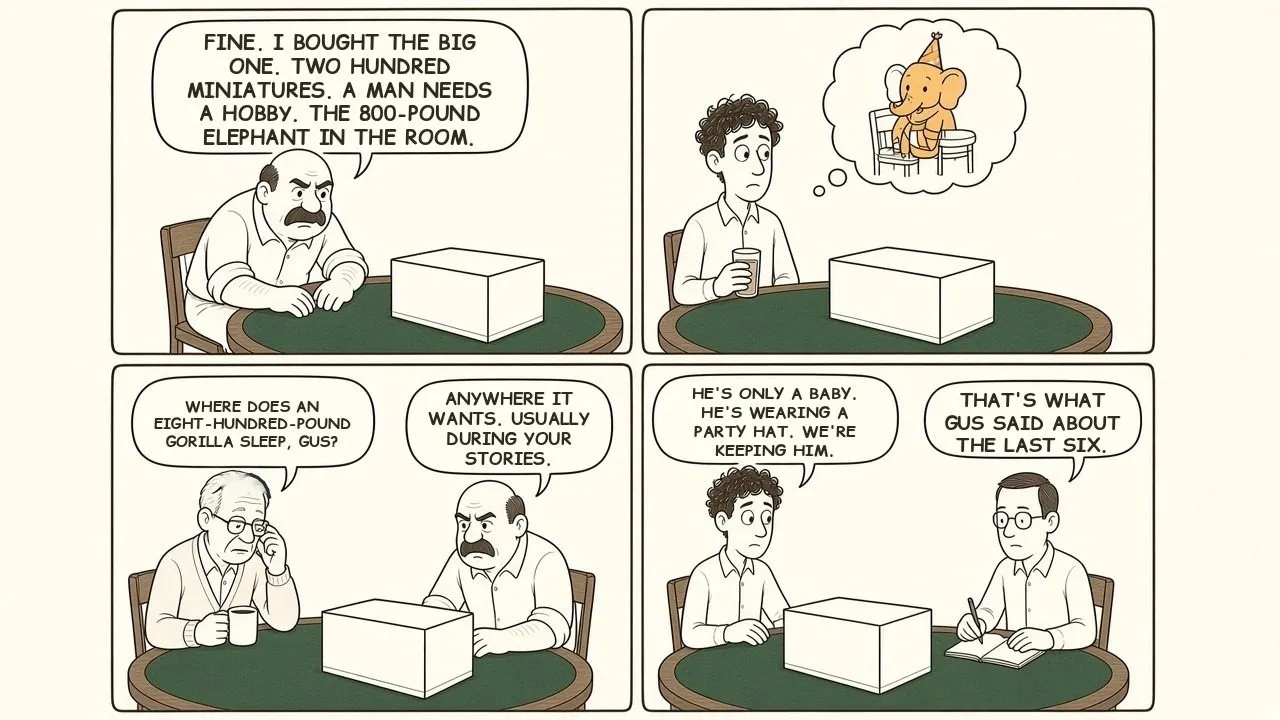
- The strip. Four old friends at a game table who never let one slide.
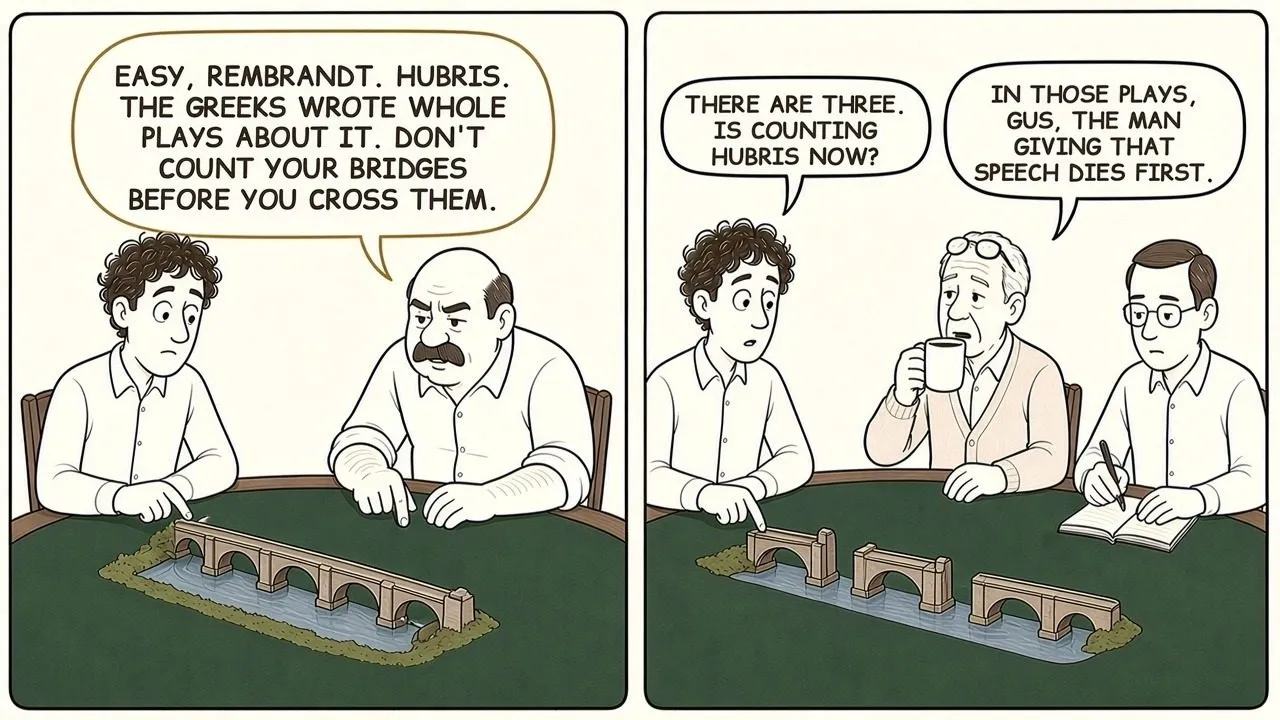
Don't count your bridges before you cross them.
The Parents: Don't count your chickens before they hatch + Don't cross that bridge until you come to it
How They Collided: No shared word, but a shared frame, "don't [verb] your [X] before [Y]." The chickens dropped out and the bridges took their place. The advice is still sound. It is just no longer about poultry.
Bronze Bear
Meet the table.
Four old friends, one game night, and no malaphor goes unpunished.
Gus
Says most of the malaphors. Has never noticed a single one.
Teddy
Pictures every blend literally, so you will see the Pope in the woods.
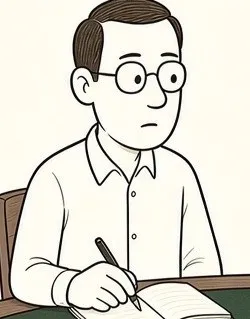
Pete
Writes every one down in a pocket notebook. Can read back what you said in March.
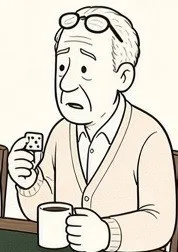
Walt
Knows where every idiom came from. Or thinks he does.
Two more strips from the book
Under the jokes, real science.
Chapter 1 explains why your brain does this, using decades of research on slips of the tongue: how idioms are stored as whole chunks, why two phrases with the same meaning race each other to your mouth, and why the loser sometimes leaks into the winner. Short "Brain Bit" sidebars teach one more idea at a time.
The origins were fact-checked against historical dictionaries and phrase archives. Where an origin is disputed, the book says so. Where a popular story is false, it says that too, with some pleasure.
The chapters sort malaphors by how they collide
- Same Meaning, Different Words. The classics, plus blends so good they replaced their parents.
- Same Shape, Same Beat. Idioms built on the same frame.
- The Pivot Word. One shared word lets a sentence switch tracks halfway through.
- Shared Imagery. Animals, kitchens, bodies and weather, where the pictures do the blending.
- Crossed Wires. Parents that disagree. The funniest collisions in the book.
- Multi-Car Pileups. Three or more idioms at once.
- On Purpose. The deliberate ones, and everything credited to Yogi Berra.
Read it front to back, or one entry while the pasta water boils.
For word lovers, trivia fans, and anyone who has ever sat through a meeting.
- Author
- Levi JA Wilson
- Format
- Full-color paperback, 6 x 9 in. Kindle eBook.
- Pages
- 254
- ISBN
- 9798164249311 (paperback)
- Publisher
- Independently published
- Published
- October 2026
Heard one in the wild? Send us your malaphor and it could be in the next volume.